
Retained earnings are negative retained earnings a critical component of a company’s equity, representing the cumulative amount of net income that has been retained within the company rather than distributed to shareholders as dividends. This section will delve into the concept of retained earnings, their calculation, reporting, and strategic implications, with a focus on Canadian accounting standards and practices. This figure is not static; it evolves over time, influenced by the company’s profitability, dividend policies, and other factors.
Create a free account to unlock this Template
For instance, a company in a growth phase may incur deficits due to substantial capital expenditures aimed at expanding market share, which could eventually lead to profitability. Retained earnings represent profits a company hasn’t distributed for years, preferring to keep them in its coffers to fund operating activities or constitute rainy-day funds. When a company’s loses consistently over a How to Run Payroll for Restaurants long stretch, it reports negative retained earnings, the kind that portray an unflattering image of the business in investor quarters.
Can you have a negative churn rate?

The admonition not to put all your eggs in one basket is especially appropriate for speculative investments. Andy Smith is a Certified Financial Planner (CFP®), licensed realtor and educator with over 35 years of diverse financial management experience. He is an expert on personal finance, corporate finance and real estate and has assisted thousands of clients in meeting their financial goals over his career. Although dividend yields cannot be negative, your total returns may fall into the red when share prices decline significantly. If Stock Y pays out a 1 percent dividend yield, your total return would be negative when Stock Y’s share price falls by more than 1 percent.

How to Read Company Quarterly Results
Additionally, accounting adjustments and write-offs can significantly impact retained earnings. Asset impairments, such as goodwill or inventory write-downs, result in substantial charges against earnings. Under accounting standards like GAAP or IFRS, companies must periodically assess asset values and recognize impairments when necessary. These adjustments, though non-cash, can materially affect the retained earnings balance.
- Implementing cost controls and optimizing operations can reduce expenses and improve margins.
- They then report gain or loss on the sale of their shares like any other capital transaction.
- If the company has 50 million shares outstanding, each share would be worth $4.91 or $245.66 million ÷ 50 million shares.
- Payment of dividends is largely governed by the business acts (or laws) of the jurisdiction in which the corporation is incorporated.
- Retained earnings are part of the equity section on a company’s balance sheet and reflect the accumulated profits and losses over time.
- A negative retained earnings balance is known as an accumulated deficit, meaning the company has made more losses than profits.
- At that point, the precise amount of retained earnings is irrelevant, as the firm essentially has been reduced to a pile of cash.
- Retained earnings offer internally generated capital to finance projects, allowing for efficient value creation by profitable companies.
- Investing in early-stage companies may be suitable for investors with a high tolerance for risk, but stay away if you are a very conservative investor.
- Negative retained earnings are caused by constant losses, huge dividends, or errors in finance.
- Under accounting standards like GAAP or IFRS, companies must periodically assess asset values and recognize impairments when necessary.
- For instance, a multinational corporation that restates earnings due to revenue recognition errors might experience a sharp drop in retained earnings.
Thus, a company with a single product that is in Phase III trials as a diabetes treatment will be compared with other similar companies to get an idea of its valuation. The account is usually titled “Accumulated Deficit” or “Accumulated Losses” when the balance is negative. Similarly, the iPhone maker, whose fiscal year ends in September, had an accumulated deficit of $214 million at the end of September 2023.
Evaluating Feasibility Constraints in Business Operations
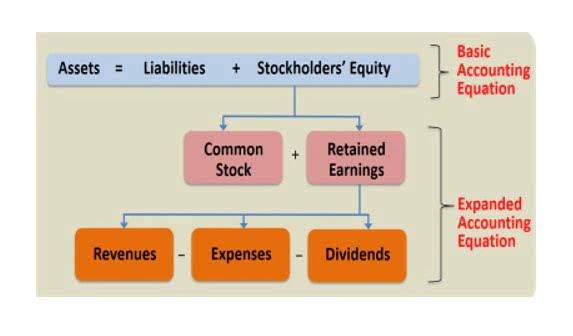
Retained earnings are an accounting measure, representing the portion of profits not distributed to shareholders. However, it’s essential to understand that these earnings may not necessarily reflect the company’s available cash. Companies can reinvest these earnings in non-cash assets or operations, making it important to assess the company’s cash flow separately. Dividends are a critical aspect of shareholder value, often seen as a sign of a company’s financial health and profitability.
Additional Questions & Answers
Retained earnings are the portion of a company’s cumulative profit that is held or retained and saved for future use. Retained earnings could be used to fund an expansion or pay dividends at a later date. Retained earnings are related to net (as opposed to gross) income because they reflect the https://www.preton.org/charitable-contributions-requirements-for-written/ net income the company has saved over time. Management and shareholders may want the company to retain earnings for several different reasons.
Deja una respuesta